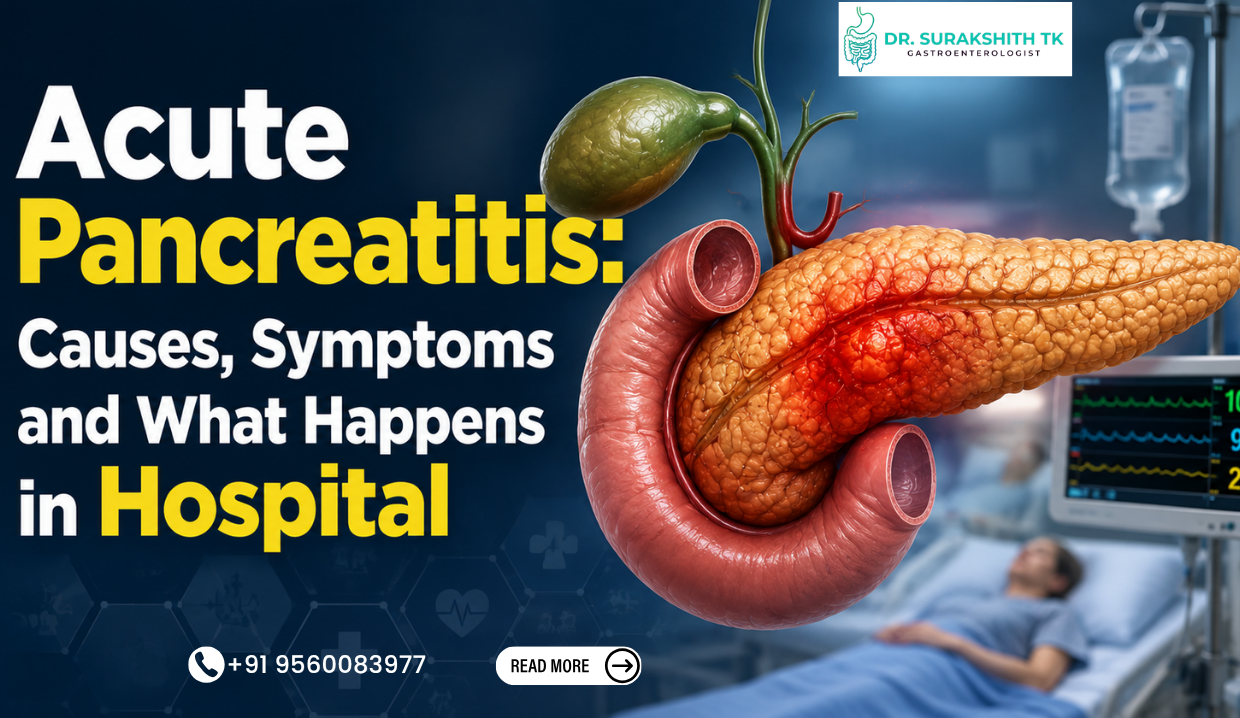
Acute Pancreatitis: Causes, Symptoms and What Happens in Hospital
Sudden, severe abdominal pain could be more than indigestion.
By : Dr. Surakshith T K
Few kinds of pain announce themselves the way acute pancreatitis does. It isn't the dull ache of a bad meal or the cramping of gas — it's a sudden, sharp, unrelenting pain in the upper abdomen that can leave a person doubled over and unable to find a comfortable position. If you or someone you love has ever been rushed to the hospital with this kind of pain, you already know how frightening and confusing those first few hours can be.
Let's break down what's actually happening inside the body, why it happens, and what to expect once you walk through the hospital doors.
The pancreas is a small but powerful organ tucked behind the stomach. It produces digestive enzymes that break down food and hormones like insulin that regulate blood sugar. In acute pancreatitis, these digestive enzymes activate too early — instead of waiting to reach the intestine, they start attacking the pancreas itself. This causes sudden inflammation, swelling, and in severe cases, tissue damage.
It's not a slow-building illness. It comes on fast, often within hours, and needs urgent medical attention.
What Causes It?
1. Gallstones: This is the single most common cause. A gallstone can block the duct through which pancreatic enzymes normally drain, causing them to back up and activate inside the pancreas.
2. Heavy alcohol use:e Chronic or binge alcohol consumption is the second most common trigger, and repeated episodes can eventually lead to permanent pancreatic damage.
3. High triglyceride levels: ls Very high fat levels in the blood, often from uncontrolled diabetes or genetic conditions, can also inflame the pancreas.
4. Certain medications: Some drugs, though a small percentage of cases, are known to trigger pancreatitis as a side effect.
5. Abdominal trauma or post-surgical complications: Injury to the abdomen, or complications following procedures like ERCP, can occasionally set off an episode.
6. Infections and other rare causes: Certain viral infections, high calcium levels, and, in some cases, no identifiable cause at all (called idiopathic pancreatitis) round out the list.
Recognising the Symptoms
The hallmark symptom is severe pain in the upper abdomen, often radiating straight through to the back. Other common signs include:
Nausea and repeated vomiting Fever and a rapid pulse A swollen, tender belly Pain that worsens after eating, especially fatty food Feeling generally very unwell, sometimes with confusion in severe cases
This is not a "wait and see" kind of pain. If it's sudden and severe, it's genuinely worth heading straight to a hospital rather than trying home remedies first. Many patients later say their symptoms were dismissed initially, which is why consulting the Best gastroenterologist in Kalkaji at the very first sign of unexplained abdominal pain can make a real difference in outcome.
What Happens in the Hospital
Walking into the emergency room with suspected pancreatitis usually kicks off a fairly structured process:
1. Diagnosis: Doctors will run blood tests to check pancreatic enzyme levels (amylase and lipase), along with imaging like an ultrasound or CT scan to look for gallstones, swelling, or complications.
2. Fasting and IV fluids: The pancreas needs rest. Patients are usually kept off food initially and given fluids through an IV to prevent dehydration and support the body while it heals.
3. Pain management: Because the pain can be intense, doctors prescribe appropriate pain relief to keep patients comfortable during the acute phase.
4. Monitoring for complications: Mild cases often improve within a few days, but doctors closely watch for complications like infection, fluid collections around the pancreas, or organ dysfunction, especially in more severe episodes.
5. Treating the underlying cause: If gallstones are the culprit, a procedure to remove the gallbladder may be recommended once the inflammation settles. This is often where a hospital team brings in a specialist — many patients are referred to the Best gastro surgeon in South Delhi to safely manage gallstone removal or any surgical intervention needed.
6. Gradual return to eating:g Once symptoms improve, patients are slowly reintroduced to a light, low-fat diet before resuming normal meals.
Recovery and Long-Term Outlook
Most people with a mild first episode recover fully within a week or two, provided the underlying cause is addressed. However, repeated episodes — particularly from ongoing alcohol use or unmanaged gallstones — can lead to chronic pancreatitis, a long-term condition that affects digestion and blood sugar control permanently.
This is why follow-up care matters just as much as the emergency treatment itself. A consultation with the Best gastroenterologist in Kalkaji. After discharge helps track healing, adjust diet plans, and catch any early signs of recurrence. For patients who needed surgical management, ongoing check-ins with the Best gastro surgeon in South Delhi ensure the gallbladder or duct issues don't resurface.
Prevention Really Does Help
While not every case can be avoided, several risk factors are within our control:
Limiting alcohol intake significantly reduces recurrence risk Managing triglyceride and blood sugar levels through diet and medication Getting gallstones evaluated and treated before they cause a full-blown attack Avoiding self-medicating with drugs known to affect the pancreas without medical guidance
The Bottom Line
Acute pancreatitis can feel alarming, but with prompt hospital care, most people recover well. The key is not ignoring the warning signs and getting the right specialist involved early. Whether it's an urgent evaluation from the Best gastroenterologist in Kalkaji. or surgical care from the Best gastro surgeon in South Delhi. Timely treatment is what makes the biggest difference between a short hospital stay and a long-term complication.
FAQs
1. What is the most common cause of acute pancreatitis? Gallstones are the leading cause, followed by heavy alcohol use.
2. Is acute pancreatitis life-threatening? Mild cases usually recover fully, but severe cases can lead to serious complications if untreated.
3. Can acute pancreatitis happen more than once? Yes, especially if the underlying cause, like gallstones or alcohol use, isn't addressed.
4. How long is hospital stay usually required? Mild cases often need 3–7 days; severe cases may require longer monitoring.
5. Can diet alone prevent pancreatitis? A low-fat, balanced diet helps, but underlying causes like gallstones still need medical treatment.
Dr. Surakshith T K
Specialist Gastroenterologist and Hepatologist
Dr. Surakshith T K is a leading gastroenterologist and hepatologist
with 12+ years of experience, specializing in advanced endoscopic procedures including
POEM, ERCP, EUS, ESD/EMR, and bariatric endoscopy. He is known for expert care in GI,
liver, pancreatic, and biliary disorders with a strong focus on early cancer detection.