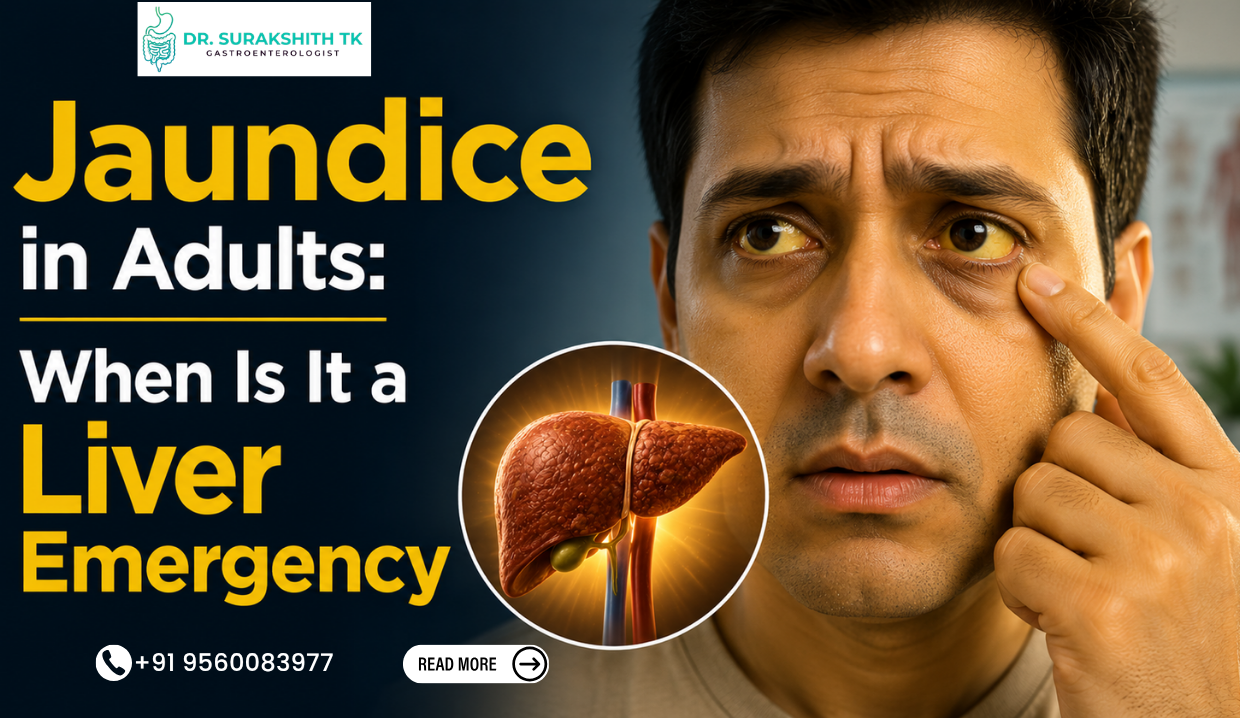
Yellowing skin and eyes can mean many things — from a mild, temporary issue to a serious liver emergency.
By : Dr. Surakshith T K
Seeing a yellow tinge in your eyes or skin for the first time can be unsettling. Is it something minor that will pass on its own, or is your body signaling a much bigger problem? Jaundice in adults is one of those symptoms that people often try to explain away — "maybe it's just tiredness" or "maybe I ate something odd" — but it's actually your body's way of waving a red flag about your liver.
Let's break down what jaundice really means, why it happens, and most importantly, how to know when it's time to stop waiting and get help immediately.
Jaundice happens when there's too much bilirubin — a yellow pigment created when old red blood cells break down — building up in your blood. Normally, your liver processes bilirubin and removes it from the body. When the liver can't keep up, or something is blocking the process, bilirubin accumulates and turns the skin, eyes, and sometimes urine a yellowish shade.
It's not a disease in itself — it's a symptom, and the underlying cause can range from mild and temporary to genuinely dangerous.
Common Causes of Jaundice in Adults
1. Hepatitis (viral or alcoholic): Inflammation of the liver from viral infections (Hepatitis A, B, C) or long-term alcohol use is one of the most frequent causes of adult jaundice.
2. Gallstones:s A stone blocking the bile duct prevents bile from draining properly, causing bilirubin to back up into the bloodstream.
3. Liver cirrhosis: Long-term liver damage, often from chronic hepatitis or alcohol use, gradually reduces the liver's ability to function properly.
4. Medication reactions: Certain drugs and even some herbal supplements can strain the liver enough to trigger jaundice.
5. Pancreatic or bile duct issues: Tumors or blockages near the pancreas can compress bile ducts, leading to jaundice that develops gradually and painlessly — which makes it easy to ignore.
6. Hemolytic conditions Sometimes the issue isn't the liver at all, but the blood — when red blood cells break down faster than usual, bilirubin production simply outpaces what the liver can process.
When Jaundice Becomes a Liver Emergency
This is the part that matters most. Not all jaundice is equal, and some cases genuinely need urgent medical attention rather than a wait-and-watch approach.
Seek emergency care immediately if jaundice appears along with:
Severe abdominal pain, especially in the upper right side
Confusion, drowsiness, or difficulty staying alert — this can indicate the liver is failing to clear toxins from the blood.
Uncontrolled vomiting, especially if it contains blood
High fever with chills, suggesting a possible infection of the bile duct
Rapid worsening of yellowing over just a day or two
Swelling in the abdomen or legs, which can point to fluid buildup from liver failure
Easy bruising or unusual bleeding, since a struggling liver often can't produce clotting factors properly
If even one or two of these symptoms show up alongside jaundice, this is not something to sit with overnight. This is precisely the kind of situation where consulting the Best gastroenterologist in Kalkaj without delay can be the difference between a manageable condition and a life-threatening one.
Why Timing Matters So Much
The liver is remarkably resilient, but it also has limits. Acute liver failure can develop within days in severe cases, and by the time confusion or bleeding sets in, the situation has often already become critical. Doctors frequently say the biggest mistake patients make isn't ignoring jaundice completely — it's underestimating how quickly it can escalate.
This is why anyone noticing yellowing skin or eyes, particularly alongside pain or fatigue, should not wait for it to "go away on its own." A same-week visit to the Best gastroenterologist in Kalkaji. Blood work and a liver function test can catch a serious problem early, while it's still very treatable.
What Happens During Diagnosis
A proper evaluation typically includes:
Blood tests to check bilirubin levels, liver enzymes, and clotting function Ultrasound or CT imaging to look for gallstones, tumors, or bile duct blockages Additional tests depending on suspected cause, such as viral hepatitis panels
In cases where gallstones, tumors, or bile duct blockages are found, surgical intervention may be necessary, which is why many patients are eventually referred to the Best gastro surgeon in South Delhi. For procedures ranging from gallbladder removal to more complex bile duct repair.
Treatment Depends Entirely on the Cause
There's no single treatment for jaundice because it isn't a single disease. Viral hepatitis may need antiviral medication and rest, gallstones may require removal, and advanced liver disease may need a much longer-term management plan. This is exactly why self-diagnosing or relying on home remedies for jaundice can be risky — the underlying cause needs to be pinpointed accurately first, ideally by the Best gastroenterologist in Kalkaji. Before deciding on the right path forward.
The Bottom Line
Jaundice is your liver's way of asking for attention — sometimes gently, sometimes urgently. Mild cases can often be managed with monitoring and lifestyle changes, but sudden onset, rapid worsening, or accompanying symptoms like confusion and severe pain mean it's time to treat it as an emergency. Whether it's a consultation with the Best gastroenterologist in Kalkaji for diagnosis or a referral to the Best gastro surgeon in South Delhi. For a procedure, getting evaluated early gives your liver the best chance to recover fully.
FAQs
1. Is jaundice always a sign of liver disease? Not always — it can also result from blood or bile duct issues, but the liver is the most common cause.
2. Can jaundice go away on its own? Mild cases sometimes resolve, but it should always be medically evaluated first.
3. Is jaundice contagious? Only if caused by viral hepatitis; other causes are not contagious.
4. What color changes should worry me most? Rapidly darkening urine or pale stools alongside yellow skin need urgent attention.
5. Does jaundice always need surgery? No, only cases involving blockages like gallstones or tumors typically require surgery.
Dr. Surakshith T K
Specialist Gastroenterologist and Hepatologist
Dr. Surakshith T K is a leading gastroenterologist and hepatologist
with 12+ years of experience, specializing in advanced endoscopic procedures including
POEM, ERCP, EUS, ESD/EMR, and bariatric endoscopy. He is known for expert care in GI,
liver, pancreatic, and biliary disorders with a strong focus on early cancer detection.