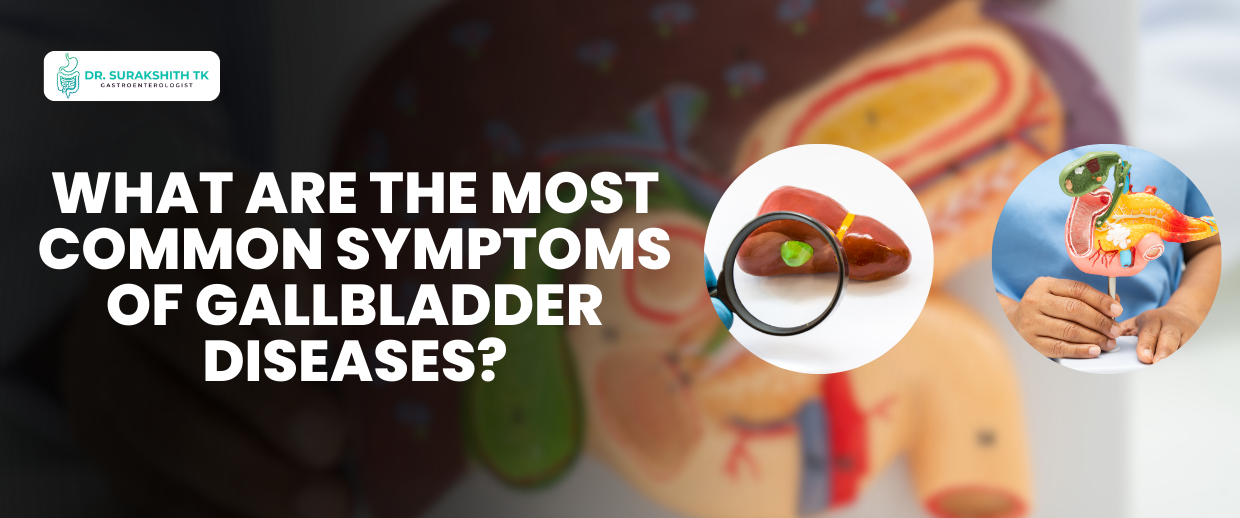
What Are the Most Common Symptoms of Gallbladder Diseases?
The gallbladder is small — a pear-shaped pouch tucked under the liver — but when it acts up, it can cause symptoms that are hard to ignore. Gallbladder diseases (most commonly gallstones and inflammation of the gallbladder) range from uncomfortable and intermittent to urgent and life-threatening. This patient-friendly guide walks you through the most common symptoms, explains what they likely mean, and gives practical advice on when to seek care.
By : Dr. Surakshith T K
What Are the Most Common Symptoms of Gallbladder Diseases?
The gallbladder in one sentence
Your gallbladder stores and concentrates bile, a fluid that helps digest fats. When bile components crystallize into stones, or when bile flow is blocked, pain and complications follow. Because the gallbladder sits just under the right rib cage, most symptoms begin there — but they can also show up in surprising places.
The hallmark symptom: upper-right abdominal pain
The single most common and telling symptom is pain in the upper right abdomen. This pain — often called biliary colic — typically:
Starts suddenly and can be intense.
Often follows a fatty meal (but not always).
Lasts from 30 minutes to several hours.
May come in waves or be steady and severe.
People describe it as sharp, cramping, squeezing, or a heavy ache that forces them to stop what they’re doing. If the pain not only bothers you but wakes you at night or recurs frequently, it’s a signal to get evaluated.
Pain that travels: back and right shoulder
Gallbladder pain commonly radiates — the discomfort may move to the middle of the back (between the shoulder blades) or to the right shoulder. This “referred pain” happens because the nerves that serve the gallbladder also connect to those areas. If you’ve had unexplained back or shoulder pain after eating, especially with concurrent abdominal pain, consider the gallbladder as a possible cause.
Nausea, vomiting, and loss of appetite
Nausea and vomiting often accompany a gallbladder attack. Sometimes the digestive upset starts first and the pain follows; sometimes the reverse occurs. Repeated vomiting or inability to keep liquids down requires urgent medical attention.
Fever and chills — a sign of infection
When pain comes with fever and chills, this suggests inflammation or infection of the gallbladder (acute cholecystitis) or an infected bile duct. These symptoms indicate a more serious process that frequently needs prompt treatment — sometimes in the hospital.
Jaundice (yellowing of skin or eyes) and dark urine
If a gallstone blocks the common bile duct — the channel that drains bile into the intestine — bilirubin can back up into the bloodstream and cause jaundice (yellowing of the skin and eyes). This can be accompanied by dark urine and pale stools. Jaundice is a red flag and should trigger immediate medical evaluation, as blocked bile flow can quickly lead to infection or liver dysfunction.
Indigestion, bloating, and intolerance to fatty food
Not every gallbladder problem causes dramatic attacks. Many people develop chronic, milder symptoms: bloating, belching, fullness after eating, and discomfort after fatty meals. These symptoms can erode quality of life over months to years and are a common reason people eventually opt for treatment.
Itching and other systemic signs
When cholesterol or bile acids affect the bloodstream — most commonly alongside jaundice — patients may experience generalized itching (pruritus). Less commonly, low-grade fever, fatigue, or unexplained weight loss can be part of the picture in chronic or complicated disease.
Atypical presentations — don’t be fooled
Gallbladder disease doesn’t always present classically. Older adults, people with diabetes, and some women may have muted or unusual symptoms — vague abdominal discomfort, poor appetite, or simply a feeling of being unwell. A low threshold for evaluation is sensible when symptoms are persistent.
Dangerous complications to watch for
Ascending cholangitis: infected, obstructed bile duct — presents with fever, jaundice and severe pain; this is an emergency.
Pancreatitis: a gallstone can block the pancreatic duct and cause sudden severe abdominal pain radiating to the back — potentially life-threatening.
Empyema or perforation: untreated infected gallbladder can develop pus or burst, which requires urgent surgery.
When to see a doctor — plain guidance
Make an appointment promptly if you have repeated episodes of upper abdominal pain, new persistent nausea/vomiting, or symptoms that interrupt daily life. Seek emergency care right away if you have severe unrelenting pain, high fever with chills, yellowing of the eyes/skin, fainting, confusion, or an inability to pass stool or gas — these can indicate serious complications.
How it’s usually confirmed (briefly)
Doctors start with your history and a physical exam. An abdominal ultrasound is the first-line imaging test for gallstones and inflammation. Blood tests check infection, liver function, and pancreatic enzymes. Additional imaging (CT, HIDA scan, MRI) or procedures may be used if needed.
Practical tips — think creatively about symptoms
Keep a symptom diary: note when pain occurs, what you ate, how long it lasted, and any relieving factors. Patterns speed diagnosis.
Try a temporary low-fat diet: avoiding sudden heavy, fatty meals can reduce the frequency of attacks while you await testing.
Don’t ignore vague or intermittent signs: early evaluation can prevent emergency situations later.
Ask about timing: if attacks are frequent, elective removal of the gallbladder (cholecystectomy) is usually safer than waiting for an emergency operation.
Final words from Dr. Surakshit T K
Gallbladder disease is common, but its symptoms vary from dramatic attacks to subtle digestive complaints. Recognizing the most common signs — upper-right abdominal pain, radiating back or shoulder pain, nausea/vomiting, fever, and jaundice — lets you act fast and avoid complications. If recurrent pain or any red-flag symptom affects you or a loved one, don’t delay evaluation. Early answers lead to simpler treatment and better outcomes.
Stay attentive to your body — and seek care early when you notice these warning signs. — Dr. Surakshit T K
Dr. Surakshith T K
Specialist Gastroenterologist and Hepatologist
Dr. Surakshith T K is a leading gastroenterologist and hepatologist
with 12+ years of experience, specializing in advanced endoscopic procedures including
POEM, ERCP, EUS, ESD/EMR, and bariatric endoscopy. He is known for expert care in GI,
liver, pancreatic, and biliary disorders with a strong focus on early cancer detection.